


.webp)


%20(1).png)
Bob and Brad
●
PT
Tool #7 Stop Bending Forward Like This, Or Your Back Will Hate You!
Bob and Brad discuss how to stop bending forward and hurting your back.
Stop Bending Forward Like This—Or Your Back Will Hate You
Your back isn't meant to fold like a paperclip. Yet every day, millions of people lean over sinks, dishes, beds, and counters with their spines rounded forward—and their backs are furious about it.
Whether you're brushing your teeth, doing dishes, or making the bed, how you bend matters more than you think. The good news? Small tweaks to your bending mechanics can be the difference between pain and pain-free.
The Golden Rule: Hinge at the Hips, Not at Your Spine
When you lean forward, your back should lock into its natural S-curve and stay put. All the movement should come from your hips—think of it like a hinge on a door. Your spine is the door frame; it doesn't bend. Your hips do the work.
The Stick Test: Not sure if you're doing it right? Grab a broomstick or a Booyah Stik and hold it along your spine. When you bend correctly, you'll feel three points of contact: the back of your head, your mid-back, and your pelvis. No contact? Time to adjust.
Real-Life Scenarios—and How to Fix Them
Brushing Your Teeth
That forward lean over the bathroom sink? Classic back killer. Fix it: Support your arm on the counter to unweight your spine. Keep yourself tall. If your counter's too short, that's a valid excuse to upgrade.
Doing Dishes
Leaning over the sink is unavoidable—but you can make it better. Quick wins:
Open the cabinet under the sink and place one foot inside. This gets you closer and more upright.
Alternatively, raise the sink level by stacking two plastic tubs (one upside down, one right-side up).
Making the Bed
Bending over a mattress is tough on the lower back. What works: Place one knee on the bed for support, keep your arm on the mattress to unweight your spine, and maintain that neutral spine position. You'll feel the difference immediately.
The Secret Weapon: Tighten Your Abs
Here's a game-changer that works for almost any bending task: Tighten your abdomen.
It sounds simple, but it's powerful. Your abs act like a corset, stabilizing your spine when you need it most. To know if you're doing it right, poke your fingers into the sides of your belly and tighten—you should feel those muscles engage.
This matters especially for heavy lifting (or snow shoveling). Brace your core first, then lift. It's the difference between pain and no pain.
The Arch Adjustment
If neutral spine still hurts, experiment. Try increasing the arch in your lower back, then decreasing it. Everyone's spine is a little different. Find what feels best for your back—and stick with it.
When Pain Persists: The Brace
If you're in the thick of back pain, a lumbar brace can help calm things down. Here's the thing: Braces aren't forever. Wear one for 4-5 days while things settle, then ease off.
Research shows that if you have spinal stenosis or spondylolisthesis (like Brad does), a brace can actually expand what you can do. If you can walk two miles with a brace but only 500 feet without it—wear the brace. You're not getting weaker; you're getting more function.
Pro tip: Adjust your brace's tightness based on activity. Snug for everyday wear, tighter when you're about to stress your back.
The Takeaway
Stop folding forward. Start hinging at the hips. Support yourself when you can. Tighten your core. Your back will thank you—and you might just get your life back.
Check out our full Back Pain Program for more tips.
%20(1).png)
%20(1).png)
%20(1).png)
Strong Like Blog

This Might Be the Cure for Migraine & Eye Fatigue
Discover how the Bob and Brad OcuSpa 3 Eye Massager combines soothing heat, cooling, and gentle massage to help ease eye strain, relieve tension, and promote relaxation for better sleep.
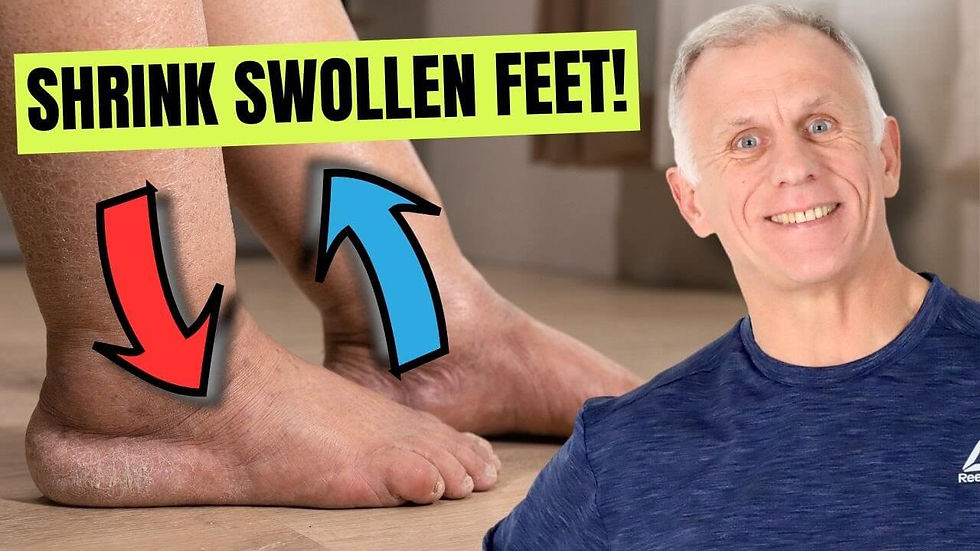
Best Remedies for Swollen Feet
The Bob and Brad team shares three simple ways to help reduce swollen feet and improve circulation at home, including leg elevation with ankle pumps, foot massage, and compression socks.


