


.webp)


%20(1).png)
Bob and Brad
●
PT
Back Pain? Are You a Flexor or Extender? Why You Need to Know.
Bob and Brad discuss why you need to know if you are a back flexor or extender and why it may be causing your back pain.
Back Pain? Are You a Flexor or Extender? Why You Need to Know
If you've been dealing with back pain, you've probably tried everything—stretches from YouTube, advice from friends, maybe even a few trips to the doctor. But here's what we've learned as physical therapists: the most important thing you need to know isn't your diagnosis. It's what type of back pain you have.
That's why we're breaking down the four main categories of back pain: Flexors, Extenders, Shakers, and Compressors. In this post, we're focusing on the first two—and we guarantee one of them will sound exactly like you.
The Flexor vs. Extender Framework
Think of your spine as having preferences. Some people's backs get angry when they bend forward. Others? They hate bending backward. And some people's spines throw a fit when you compress them. Once you know your type, you'll know exactly which exercises to do and—more importantly—which ones to avoid.
Here's the kicker: most of you are Flexors. And if you're not? You'll probably become one as you age. But don't worry—knowing your type is half the battle.
Are You a Flexor? The Signs
Bob's a Flexor, and if you answer "yes" to most of these questions, you probably are too.
Your back hurts when you sit. You know the feeling—you've been at your desk for two hours, you try to stand up, and your back goes "nope." You make that noise. The one where everyone looks at you. It might take a few steps of walking before things loosen up.
Bending forward is your enemy. Gardening, making the bed, vacuuming, washing the floor, ironing—anything where your back goes into that C-shape (rounded forward) makes it worse. The longer you stay bent, the worse it gets.
Walking feels good. Counter-intuitive? Maybe. But movement helps. We actually recommend it.
Lying down is your refuge. When you're flat on your back, the pain eases. It might take a minute to settle in, but eventually, relief.
You might have a herniated or bulging disc. A lot of people with disc issues are Flexors. If this is you, check out our Sciatica program instead.
Test Yourself: Are You Really a Flexor?
Test One: The Forward Bend
Bend your back forward into that C-position, either sitting or standing. If it hurts, stop. Do it again gently—pain means you're likely a Flexor. No pain on the first try? Repeat it 5 times. That's when it usually catches up with you.
Test Two: The Three-Part Sit Test (This one's clever.)
Sit upright with perfect posture. Grab the edge of your chair and pull down, compressing your lower back. Does it hurt? No? Good sign you're not a Flexor.
Slouch forward into a C-position. Grab the chair and pull down again. Hurt? Bingo—you're a Flexor.
Arch your back backward. Pull down. No pain? That confirms it—extending doesn't bother you the way flexing does.
Are You an Extender? The Signs
Brad's our Extender, and his back prefers him to stay upright. If any of these sound familiar, you might be too.
You're over 50. Age-related spinal stenosis (narrowing of the spinal canal) is common after 50, and it makes you an Extender. But age isn't everything—you can be an Extender in your 30s or 40s.
You have a diagnosis of spinal stenosis or spondylolisthesis. Brad has spondylolisthesis (a vertebra that slips forward on the one below). If your doctor mentioned either of these, you're probably an Extender.
Overhead work kills you. Painting the ceiling, washing windows, reaching up—anything that arches your spine backward aggravates it. But the moment you sit down, it feels better. Immediately.
Walking or running causes leg pain. Brad used to be able to walk only three-fourths of a mile before his leg went numb. He'd have to stop. This is classic Extender behavior, and it ties into the next point.
The shopping cart feels like a miracle. You know that feeling when you lean on a shopping cart, and suddenly your back doesn't hurt? That slight forward bend? That's your Extender back saying "thank you."
Test Yourself: Are You Really an Extender?
The Standing Extension Test
Stand up and arch your back backward—either to the right or to the left. You can raise your arms overhead or have someone push gently down on your shoulders. Do you feel pain?
Repeat it 10 times. Some people don't feel it on the first try, but by rep 3 or 4, it starts to irritate. That's your sign.
Here's the Bottom Line
You might be a Flexor. You might be an Extender. You might even be both. And we haven't even covered Shakers and Compressors yet—that's coming in our next post.
The reason this matters? The exercises that help a Flexor can make an Extender worse, and vice versa. You don't need to know if you have a herniated disc or stenosis or spondylolisthesis to fix your back. You just need to know your type.
Once you do, you'll know exactly what to do and what to avoid. And that changes everything.
Ready to tackle your back pain? Check out our full Back Pain Program in the Program section. You can download free PDF guides with all the exercises and video reviews—no email required, completely free. Find the program that matches your type, and let's get you feeling better.
And if you have sciatica? We've got a specific program for that too.
Our Favorite Products to Help
Strong Like Blog

This Might Be the Cure for Migraine & Eye Fatigue
Discover how the Bob and Brad OcuSpa 3 Eye Massager combines soothing heat, cooling, and gentle massage to help ease eye strain, relieve tension, and promote relaxation for better sleep.
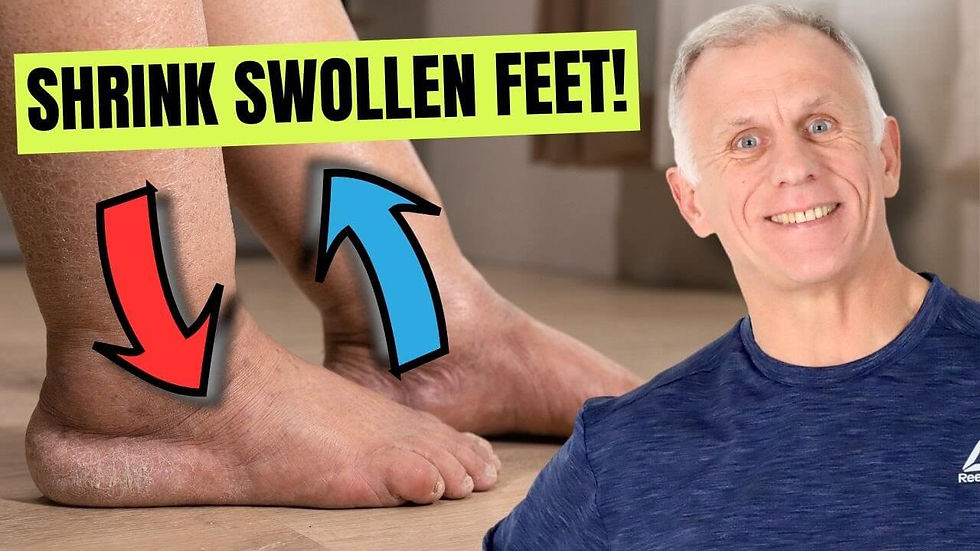
Best Remedies for Swollen Feet
The Bob and Brad team shares three simple ways to help reduce swollen feet and improve circulation at home, including leg elevation with ankle pumps, foot massage, and compression socks.


